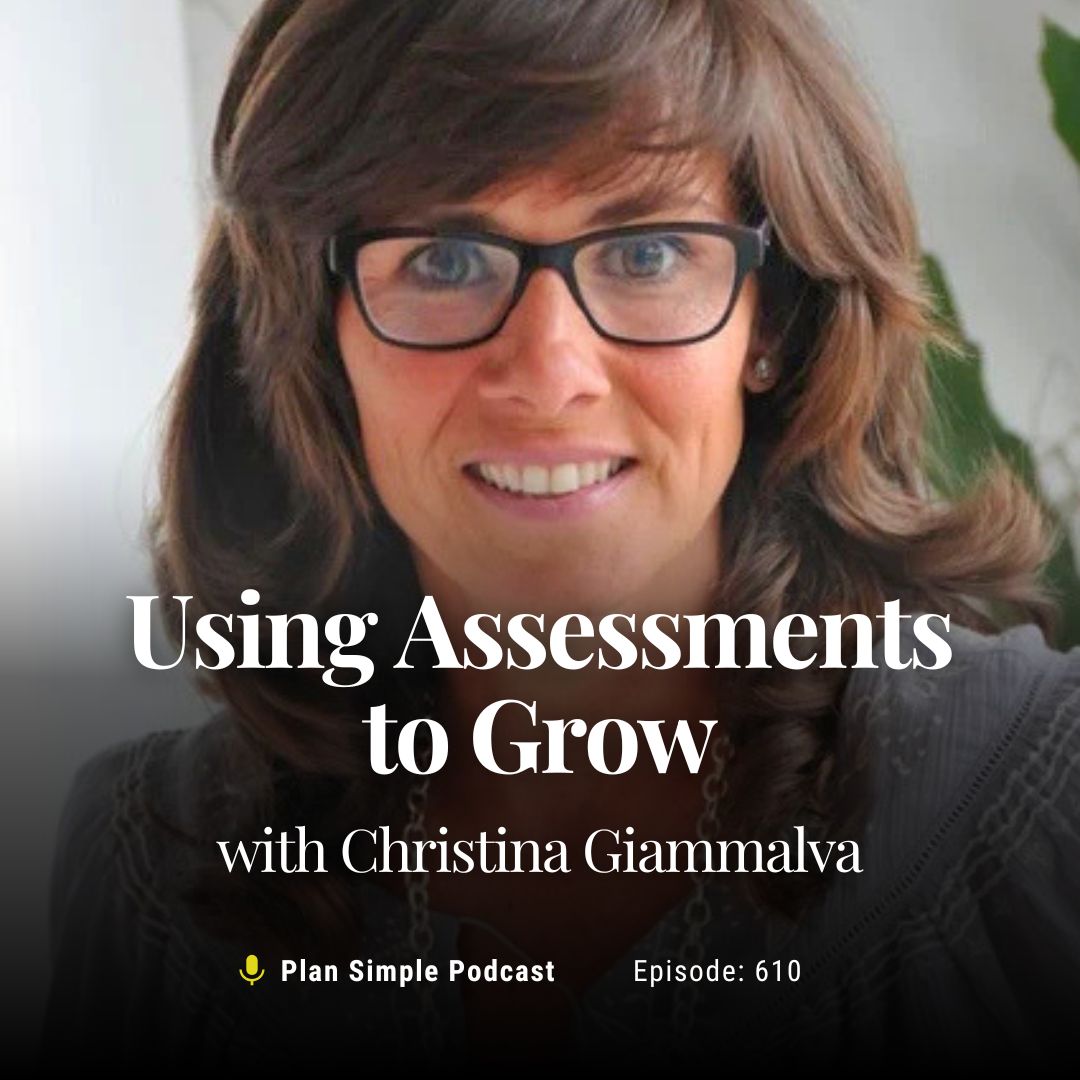
Using Assessments to Grow with Christina Giammalva
I LOVE a good assessment. They can be so useful in helping us understand ourselves and work with our own strengths or rhythms. On the flip side, if not used well, the results and reports can become more noise or even box us in. So what do we make of assessments and how can they help us?
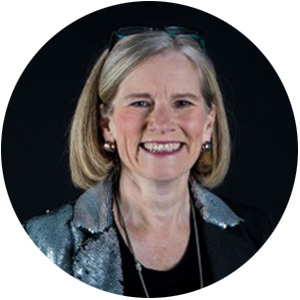
Let’s dive in with Christina Giammalva, therapist and coach, who uses assessments regularly with clients and helped write about assessments for the most recent issue of Pause Magazine.
We talk about:
- Difference between Myers–Briggs types
- Root fears identified in the Enneagram
- Comparing people with the same responses on one assessment and different responses on another
- Finding comfort in understanding how we are and working better with others by understanding we aren’t all the same
- Understanding attachment theory and wondering if we are enough
- The idea of self-acceptance, not self-improvement
DOABLE CHANGES
At the end of every episode, we share three doable changes, so you can take what you’ve heard and put it into action. Action is how change happens.
Often we feel like our actions have to be huge to match the bigness of our desires, but we have seen over and over and over again that the little things add up. By stacking up a series of Doable Changes, you will create that big change that you crave. Choose the one that really resonates with you this week and really make it part of your life.
Here are Three Doable Changes from this conversation:
- TRY AN ASSESSMENT. If you haven’t taken the Myers-Briggs or Enneagram or Attachment Theory, pick one to try. Don’t overthink the questions as you answer. Read the basics about your results. Write down any ahas you have about yourself.
- CONNECT IDEAS. Try taking more than one assessment. What information do you find showing up in different ways? What intrigues you from each?
- WORK WITH WHAT YOU LEARN. Understanding how you are wired — and how others are — can be useful. Teams often take similar assessments to understand how members operate. This can help with interpersonal dynamics. Christina found recognizing that her children were wired differently from her helped her mother them. If you have someone you live or work with willing to take the test and share results, discuss what you learn and one thing you might try to change to improve the way you communicate or work together.

ABOUT CHRISTINA
Christina Giammalva is a Somatic Counselor helping individuals from around the world reach new levels of inner calm. Through revealing the connections between the mind and body, she’s devoted to helping clients address deep-rooted issues that cause anxiety, stress, depression and other health-related struggles.